Advertising Agency Video Guide: Insights and Strategies 2026
Video has become the centrepiece of modern advertising, transforming how agencies capture attention and connect brands with audiences. In 2026, client demand for innovative advertising agency video campaigns continues to surge, driving agencies to rethink their creative strategies.
This guide delivers actionable insights and future-focused strategies for agency leaders, marketers, and creatives aiming to master video marketing. You will discover the expanding role of video, cutting-edge production techniques, effective campaign planning, measurement tools, and predictions for the evolving landscape.
Ready to elevate your agency’s video offering and stay ahead of industry trends? Dive in and unlock the power of video for tomorrow’s success.
The Evolving Role of Video in Advertising Agencies
Video has rapidly become a cornerstone of modern advertising agency video strategies. As client expectations rise and technology evolves, agencies must understand how video is reshaping the industry. From skyrocketing consumption rates to the need for creative differentiation, the influence of video is undeniable.

The Surge of Video Content Consumption
Global audiences are consuming more video than ever before. According to recent forecasts, video ad spend is expected to reach $130.97 billion in 2025, underscoring the explosive growth in demand for advertising agency video content (Video ad spend to reach $130.97 billion in 2025). Social platforms like TikTok, Instagram Reels, and YouTube Shorts are optimising their algorithms to favour video, making it essential for agencies to adapt.
Consumer preferences are also shifting, with over 80% stating they prefer video over static content. This surge is transforming how agencies plan campaigns and allocate resources, making video a non-negotiable element in the modern marketing mix.
Video’s Impact on Brand Awareness and Engagement
Advertising agency video campaigns consistently outperform static ads in terms of engagement and brand recall. Case studies reveal that brands leveraging video storytelling achieve higher interaction rates and deeper emotional connections with their audiences.
For instance, campaigns that use narrative-driven video content often see increased shares and comments, translating into measurable brand awareness. The power of visual storytelling allows agencies to evoke emotion and create memorable touchpoints that static images or text cannot replicate, placing video at the heart of effective brand strategy.
Integration with Multi-Channel Campaigns
Seamless integration is key for advertising agency video success. Agencies now blend video across social, display, and traditional channels for a unified message. Omni-channel campaigns use video to reinforce key messages, ensuring audiences encounter consistent branding wherever they engage.
Examples include video teasers on social media, extended versions on websites, and TV spots, all tailored for each platform’s unique requirements. This strategic approach maximises reach and impact, making video the connective tissue in comprehensive marketing plans.
Key Challenges for Agencies
Despite its advantages, advertising agency video production presents challenges. Rising production costs and growing client expectations require agencies to deliver high-quality output efficiently. Creative differentiation is critical, as audiences become fatigued by repetitive formats and generic messages.
Navigating platform-specific requirements adds complexity, with each channel demanding unique video lengths, formats, and technical standards. Agencies must stay agile to overcome these obstacles and continue delivering standout campaigns to their clients.
The Competitive Edge for Agencies
Agencies with advanced advertising agency video capabilities hold a significant advantage in the marketplace. Those investing in in-house video teams are better positioned to win new business pitches and respond quickly to client needs.
While outsourcing remains an option, building internal expertise allows for greater creative control and faster turnaround times. Ultimately, agencies that prioritise video innovation and production quality will maintain a competitive edge as the industry moves into 2026.
Strategic Planning for Agency Video Campaigns
Strategic planning is the backbone of a successful advertising agency video campaign. Thorough preparation ensures that creative ideas align with client goals, budgets, and timelines. By following a structured approach, agencies can consistently deliver impactful results and outperform client expectations.

Setting Clear Objectives and KPIs
Every advertising agency video project should begin with well-defined objectives. Is the goal to boost brand awareness, drive conversions, or retain loyal customers? Clear objectives guide the creative process and keep teams focused. Selecting the right KPIs, such as view-through rate, click-through rate, and ROI, is vital for tracking progress. Agencies can benefit from Advertising agency marketing strategies to ensure their video campaigns align with broader marketing objectives and deliver measurable outcomes.
Audience Research and Persona Development
Understanding the target audience is essential for every advertising agency video campaign. Agencies should analyse both demographic and psychographic data to build detailed personas. This helps tailor content that resonates with viewers’ interests, behaviours, and needs. Investing time in audience research also uncovers unique insights that fuel creative differentiation and drive engagement. Agencies that know their audience can deliver more relevant and effective video experiences.
Creative Concept Development
The creative concept sets the tone and direction for any advertising agency video. Collaborative brainstorming sessions, guided by a strong creative brief, help generate original ideas. Data-driven insights, such as trending formats or audience preferences, should inform and inspire these sessions. When teams balance creativity with strategic intent, their video concepts become both memorable and effective. Creative development grounded in research ensures campaigns stand out in a saturated market.
Budget Allocation and Resource Planning
Budgeting is a critical element in advertising agency video planning. Agencies must account for all costs, from production and talent to distribution and promotion. It is important to balance high production value with budget constraints, making smart choices about where to invest. Resource planning includes scheduling equipment, booking talent, and allocating team members efficiently. Transparent budgeting builds client trust and helps avoid costly surprises during production.
Timeline and Workflow Optimisation
Efficient timelines and workflows are key to delivering advertising agency video projects on schedule. Project management tools, such as Gantt charts, can help visualise deadlines and dependencies. Agile production cycles allow for rapid adjustments and quick delivery, which is essential in fast-paced digital environments. Workflow optimisation ensures that teams collaborate smoothly, reduces bottlenecks, and keeps projects moving forward. Agencies that master these processes consistently exceed client expectations.
Legal and Compliance Considerations
Legal and compliance issues should never be an afterthought in advertising agency video campaigns. Agencies must secure all necessary rights, including copyright, licensing, and talent agreements. Adhering to platform-specific and regulatory guidelines helps avoid legal disputes and protects both the agency and its clients. Staying proactive on compliance ensures campaigns run smoothly and maintain their reputation for professionalism.
Advanced Video Production Techniques for Agencies in 2026
The landscape of advertising agency video is evolving rapidly, with cutting-edge production techniques setting new industry benchmarks. Agencies must embrace innovation, streamline workflows, and ensure content caters to diverse audiences. Mastery of advanced techniques will distinguish agencies and drive campaign impact in 2026.
Leveraging Cutting-Edge Technology
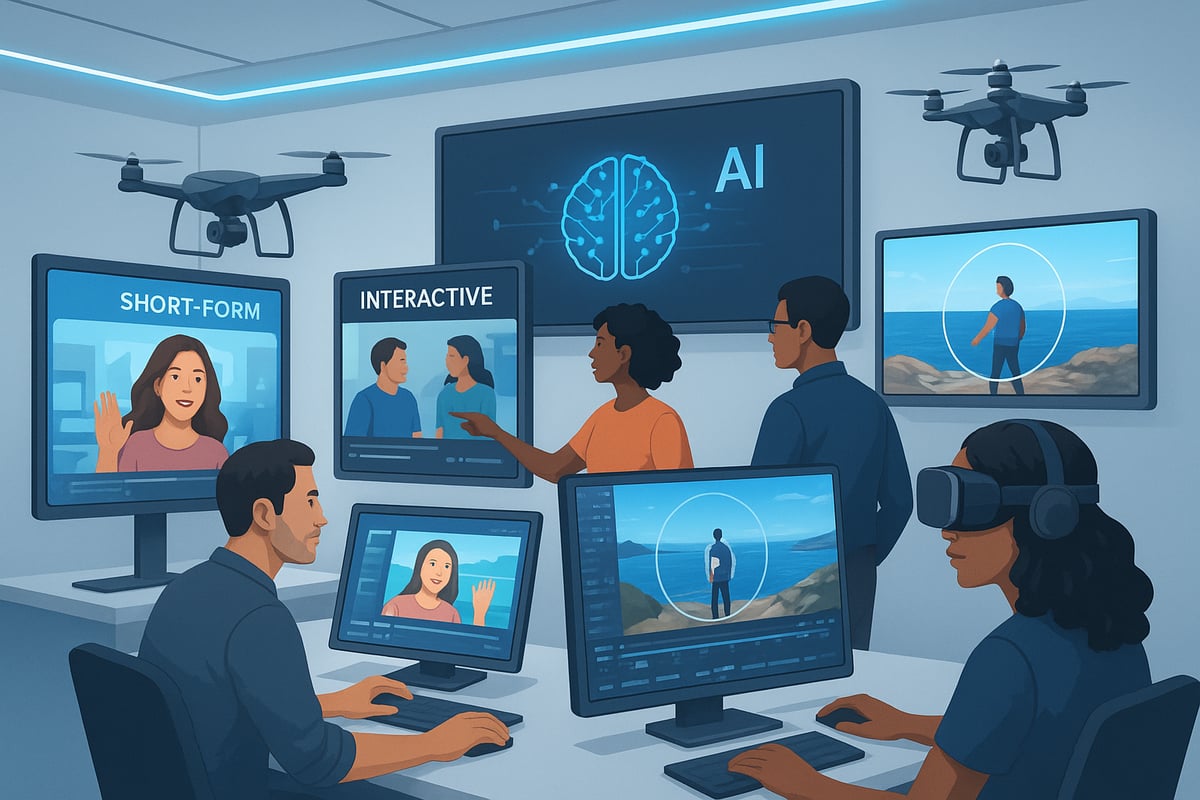
AI-powered editing tools are revolutionising advertising agency video workflows in 2026. Automation accelerates tasks like rough cuts, scene detection, and sound mixing, enabling rapid content delivery. Augmented reality (AR) and virtual reality (VR) now offer immersive brand experiences, allowing viewers to interact with products or environments virtually.
Drones and 360-degree cameras provide unique perspectives, adding cinematic value without excessive costs. Notably, AI to power 40% of video ads by 2026, highlighting the rapid adoption of generative AI in production processes. For agencies, integrating these technologies is essential to remain competitive and deliver innovative advertising agency video content.
Trends in Video Formats and Storytelling
Video format preferences continue to evolve, with short-form videos dominating mobile platforms. Vertical video is essential for mobile-first campaigns, catering to the way audiences naturally hold their devices. Long-form and episodic content, however, remains valuable for deep storytelling and brand affinity.
Interactive videos encourage viewers to make choices or explore features, enhancing engagement and retention. For advertising agency video strategies, balancing these formats ensures content resonates across channels. Agencies must monitor emerging trends to align storytelling approaches with audience viewing habits.
Enhancing Production Value on a Budget
High production value is no longer reserved for big budgets. Agencies can leverage DIY production hacks such as smartphone filming, affordable lighting, and compact audio gear. Stock footage and animation integration help fill visual gaps and maintain consistency without extensive shoots.
Creative use of templates and motion graphics can elevate the look and feel of advertising agency video projects. By smartly allocating resources, agencies can satisfy client expectations for quality while controlling costs. This flexibility is crucial in a competitive market with rising production demands.
Remote and Hybrid Production Workflows
Remote and hybrid workflows are now standard in advertising agency video production. Cloud-based collaboration tools enable distributed teams to review, edit, and approve footage in real time. Virtual sets and remote shoots reduce the need for large on-site crews, increasing efficiency.
Agencies have adopted platforms that streamline project management, asset sharing, and feedback cycles. These innovations ensure continuity regardless of team location. For clients, this means faster turnarounds and more agile campaign delivery, a key differentiator in 2026.
Talent Sourcing and Management
Diverse talent is critical to successful advertising agency video campaigns. Agencies work with influencers, actors, and creators to bring authentic voices to campaigns. User-generated content (UGC) is increasingly integrated, offering relatability and trust.
Building a reliable network of freelance videographers and editors allows agencies to scale production capacity on demand. Clear contracts and transparent agreements are important for talent management. Agencies that foster strong talent relationships can deliver standout video content across multiple briefs.
Quality Control and Consistency
Maintaining high standards is essential in advertising agency video production. Agencies rely on detailed checklists to ensure technical and brand requirements are met throughout the process. Review and revision cycles are integrated into workflows, allowing teams to catch errors and refine messaging.
Standardised templates and brand guidelines help maintain consistency across campaigns and platforms. Regular training ensures all team members stay current with evolving techniques. Consistent quality builds client trust and strengthens agency reputation in a crowded market.
Accessibility and Inclusivity in Video
Modern advertising agency video content must be accessible and inclusive. Subtitles and captions make videos usable for viewers with hearing impairments and improve engagement in sound-off environments. Audio descriptions expand accessibility for visually impaired audiences.
Culturally sensitive content is vital for global campaigns. Agencies localise language, imagery, and references to resonate with diverse audiences. By prioritising inclusivity, agencies expand reach and demonstrate social responsibility, setting the standard for video marketing in 2026.
Maximising Video Campaign Impact: Distribution and Promotion Strategies
Strategic distribution and promotion are vital for unlocking the full value of any advertising agency video campaign. With consumer attention fragmented across platforms, agencies must tailor their approaches to maximise reach, engagement, and ROI. The following strategies empower agencies to elevate their clients' video presence and stand out in a rapidly evolving digital landscape.

Platform-Specific Distribution Tactics
Each platform requires a unique approach to maximise advertising agency video results. YouTube thrives on longer tutorials and branded series, while TikTok and Instagram Reels prioritise short, punchy content. LinkedIn is ideal for B2B thought leadership videos, and Facebook supports a mix of live streams, stories, and in-feed clips.
| Platform | Ideal Video Length | Best Aspect Ratio | Posting Times |
|---|---|---|---|
| YouTube | 6–12 min | 16:9 | Evenings, weekends |
| TikTok | 15–60 sec | 9:16 | Afternoons |
| Instagram Reels | 15–60 sec | 9:16 | Lunch, evenings |
| 1–3 min | 1:1 or 4:5 | Mornings, evenings | |
| 1–2 min | 16:9 | Weekdays, mornings |
For a comprehensive approach to digital video integration, agencies can benefit from digital media agency expertise, ensuring each platform’s nuances are addressed for optimal performance.
Paid vs. Organic Video Promotion
Balancing paid and organic promotion is crucial for advertising agency video campaigns. Paid amplification guarantees immediate reach, precise targeting, and measurable results. Organic strategies, like leveraging brand communities and encouraging shares, foster authentic engagement and long-term loyalty.
Key points to consider:
- Allocate budgets for high-impact launches and retargeting.
- Use organic reach for nurturing brand advocates.
- Combine both approaches for sustained visibility.
A blended strategy ensures that video content reaches both new and existing audiences, supporting a robust campaign lifecycle.
Influencer and Partnership Amplification
Influencers and brand partners can dramatically extend the reach of advertising agency video campaigns. Collaborating with trusted creators adds credibility and introduces content to new, engaged communities. Select partners whose audience aligns with campaign goals and brand values.
Consider these collaboration models:
- Sponsored content with established influencers.
- Co-created video series with industry partners.
- User-generated content campaigns to boost authenticity.
Partnerships amplify messaging and build social proof, increasing campaign resonance and effectiveness.
Video SEO and Discoverability
Optimising video for search is a non-negotiable step in any advertising agency video strategy. Craft compelling titles, write detailed descriptions, and design eye-catching thumbnails. Use relevant keywords, add captions, and implement schema markup to enhance search visibility.
- Always upload a transcript or subtitles for accessibility and SEO.
- Create playlists to encourage longer watch times.
- Submit video sitemaps for improved indexing.
These tactics ensure that video content surfaces in search results, driving organic discovery and incremental views.
Retargeting and Personalisation
Retargeting strategies allow agencies to reconnect with viewers who have engaged with previous content. Personalised advertising agency video ads, tailored to user behaviour and preferences, dramatically improve relevance and conversion rates.
- Segment audiences by viewing history or website actions.
- Use dynamic creative to serve tailored offers or messages.
- Integrate video into retargeting funnels on social and programmatic platforms.
Personalisation deepens audience relationships and encourages repeat engagement, maximising the return on every video impression.
Analysing Distribution Performance
Continuous measurement is essential for optimising advertising agency video distribution. Track key performance indicators such as reach, engagement, view-through rates, and conversions. Use analytics platforms to compare results across channels and identify top-performing content.
- Employ dashboards for real-time performance tracking.
- Conduct A/B tests to refine creative and placement.
- Adjust strategies based on data-driven insights.
Learning from measurable outcomes enables agencies to refine future campaigns, ensuring each video delivers maximum impact and value.
Measuring Success: Analytics, ROI, and Optimisation
Understanding the effectiveness of an advertising agency video strategy is essential for sustained growth and client satisfaction. By focusing on precise measurement and ongoing optimisation, agencies can demonstrate value, refine campaigns, and secure stronger results for clients.
Key Video Marketing Metrics for Agencies
To measure advertising agency video success, agencies must track the right metrics. Engagement rates reveal how viewers interact with content, while completion rates indicate how many watch the full video. Conversion tracking ties video views to desired actions, such as sign-ups or purchases.
Multi-touch attribution models help agencies understand which videos contribute most across the customer journey. By monitoring these metrics, agencies can demonstrate tangible impact and guide data-driven decisions in every advertising agency video campaign.
Tools and Platforms for Video Analytics
A robust toolkit is vital for analysing advertising agency video performance. Google Analytics provides insights into site traffic and user behaviour following video interactions. YouTube Analytics offers detailed data on watch times, audience retention, and click-through rates.
Third-party platforms like Vidyard or Wistia deliver advanced reporting and heatmaps. Integrating analytics into agency workflows ensures regular performance reviews and highlights opportunities for improvement. For deeper insights on production best practices, see Videography services and insights.
Calculating ROI for Video Campaigns
Proving return on investment is a top priority for any advertising agency video project. Agencies should connect video metrics to business outcomes, such as increased sales or leads. ROI calculations often compare campaign costs with revenue generated, using clear attribution models.
Client reporting should be transparent, focusing on how video content drives measurable value. According to digital video ad spending forecasts, investment in video continues to grow, making accurate ROI measurement even more critical for agencies.
Continuous Optimisation Strategies
Success in advertising agency video campaigns relies on ongoing optimisation. A/B testing different creatives and calls-to-action helps identify what resonates best with target audiences. Agencies should adjust campaign parameters in real time, using analytics to inform every decision.
Iterative improvements, based on feedback and performance data, keep campaigns fresh and effective. Agile processes allow for rapid adjustments, ensuring agencies remain responsive to shifting trends and audience preferences.
Learning from Successes and Failures
Every advertising agency video campaign offers valuable lessons. Reviewing analytics helps identify what worked and where improvements are needed. Case studies of campaign pivots, guided by real-time data, can inform future strategies.
Building an internal knowledge base ensures learnings are shared across teams. By fostering a culture of reflection and adaptation, agencies position themselves as forward-thinking partners, ready to capitalise on emerging opportunities in video marketing.
The Future of Advertising Agency Video: Trends and Predictions for 2026
The future of advertising agency video is evolving at a rapid pace, with technology, consumer habits, and regulations all shaping new opportunities. Agencies that adapt to these trends will be best positioned to deliver exceptional value to clients in 2026 and beyond.
AI-Driven Content Creation and Personalisation
Artificial intelligence is revolutionising advertising agency video. From automated editing to real-time content personalisation, AI tools make it easier to create bespoke videos at scale. This enables agencies to deliver hyper-relevant content tailored to each viewer, increasing engagement and conversion rates.
Agencies are also integrating machine learning into campaign planning, using predictive analytics for smarter targeting. As AI becomes more advanced, teams can experiment with dynamic storytelling and data-driven scripts. The advertising agency video landscape will increasingly rely on these intelligent solutions to stay competitive.
The Rise of Shoppable and Interactive Video
Shoppable and interactive video is reshaping how brands connect with consumers. In 2026, expect seamless buying experiences directly within advertising agency video campaigns. Viewers can click, explore, and purchase products without leaving the video, streamlining the path to conversion.
Interactive elements, such as polls, quizzes, and branching storylines, drive higher engagement. Short-form video is a key driver of this trend, especially on mobile platforms. According to Short-form video to dominate mobile views by 2025, brands are investing heavily in formats that capture attention quickly and boost e-commerce results.
Sustainability and Ethical Considerations
Sustainability is now a priority for every advertising agency video project. Clients are demanding eco-friendly production methods, from virtual sets to reduced travel and green energy use. Ethical advertising is also gaining ground, with agencies focusing on transparency and authentic storytelling.
Teams are adopting sustainable materials, minimising waste on set, and offsetting carbon emissions. Ethical considerations extend to representation and inclusivity in video content, ensuring messages resonate with diverse audiences. These practices build trust and long-term brand loyalty.
Regulatory Changes and Data Privacy
The regulatory landscape for advertising agency video is tightening. Anticipated changes in data privacy laws will impact how agencies collect, store, and use viewer information. Agencies must stay ahead of international compliance requirements to avoid costly penalties and protect client reputations.
Data minimisation, explicit consent, and transparent data practices are becoming standard. This shift requires investment in secure data infrastructure and regular staff training. Agencies that prioritise privacy will maintain a competitive edge and client trust.
Evolving Client Expectations
Client expectations for advertising agency video are higher than ever. Businesses want faster turnarounds, measurable ROI, and strategic insights that go beyond production. Agencies must act as true partners, offering guidance on creative direction, platform strategy, and campaign optimisation.
Clients are also seeking flexibility, requesting content that can be quickly adapted across multiple channels. The ability to deliver agile, results-driven video marketing is now a key differentiator. Agencies that consistently meet these expectations will secure lasting relationships.
Key Skills and Roles for Agency Teams
The skill set required for advertising agency video teams is expanding. AI literacy, data analytics, and creative storytelling are now essential. Cross-functional teams—combining strategists, technologists, and creatives—drive innovation and campaign success.
Agencies are rethinking their talent models, investing in ongoing training and adopting creative advertising agency approaches to stay at the forefront of industry change. Embracing a culture of continuous learning ensures teams remain adaptable and ready for the next evolution in video marketing.
As you’ve seen, mastering video is essential for agencies aiming to stand out and deliver measurable results in the fast-evolving landscape of 2026. Whether you’re looking to enhance your brand’s visibility, boost engagement, or stay ahead with the latest production techniques, having a trusted partner makes all the difference. At OxD PR, we specialise in impactful videography that’s tailored to your goals—helping you bring your creative vision to life and capture your audience’s attention. If you’re ready to take your agency’s video strategy to the next level, let’s start the conversation—explore our Videography services today.