Internet Marketing for Business: A Complete 2026 Guide

The digital landscape has transformed how businesses connect with their audiences, making internet marketing for business an essential component of modern commercial success. Whether you're running a startup in Manchester or managing an established enterprise in London, understanding how to leverage online channels effectively can mean the difference between stagnation and exponential growth. This comprehensive guide explores the strategies, channels, and best practices that define successful internet marketing in 2026, equipping you with actionable insights to strengthen your digital presence.
Understanding the Core Components of Internet Marketing
Internet marketing for business encompasses far more than simply having a website or posting occasionally on social media. It represents a comprehensive ecosystem of interconnected strategies designed to attract, engage, and convert your ideal customers through digital channels.
The foundation rests on understanding your audience's online behaviour. Modern consumers research products extensively before making purchasing decisions, comparing options across multiple platforms and seeking validation through reviews, social proof, and content that addresses their specific needs. Digital Vidya’s comprehensive framework highlights how successful campaigns integrate multiple channel types to create cohesive customer journeys.
Strategic Pillars That Drive Results
Effective internet marketing strategies are built on several interconnected pillars:
- Search Engine Optimisation (SEO) ensures your business appears when potential customers search for relevant products or services
- Content Marketing establishes authority and builds trust through valuable, informative resources
- Paid Advertising delivers immediate visibility and targeted reach across search engines and social platforms
- Email Marketing nurtures relationships and drives repeat business through personalised communication
- Social Media Marketing builds community and facilitates direct engagement with your audience
- Conversion Rate Optimisation maximizes the value of your existing traffic through strategic improvements
Each pillar works synergistically with the others, creating a multiplier effect that strengthens overall performance. A well-optimised website attracts organic traffic through SEO, while compelling content keeps visitors engaged and email campaigns convert them into loyal customers.
Building Your Search Presence Through SEO
Search engine optimisation remains one of the most valuable investments in internet marketing for business, delivering compound returns that grow stronger over time. Unlike paid advertising that stops working the moment you stop spending, SEO builds long-term assets that continue generating traffic and leads for years.
The search landscape in 2026 has evolved beyond simple keyword matching. Google's algorithms now prioritize user experience, content quality, and expertise signals when determining rankings. This shift means businesses must focus on creating genuinely helpful resources rather than simply optimizing for search engines.
Technical Foundations That Matter
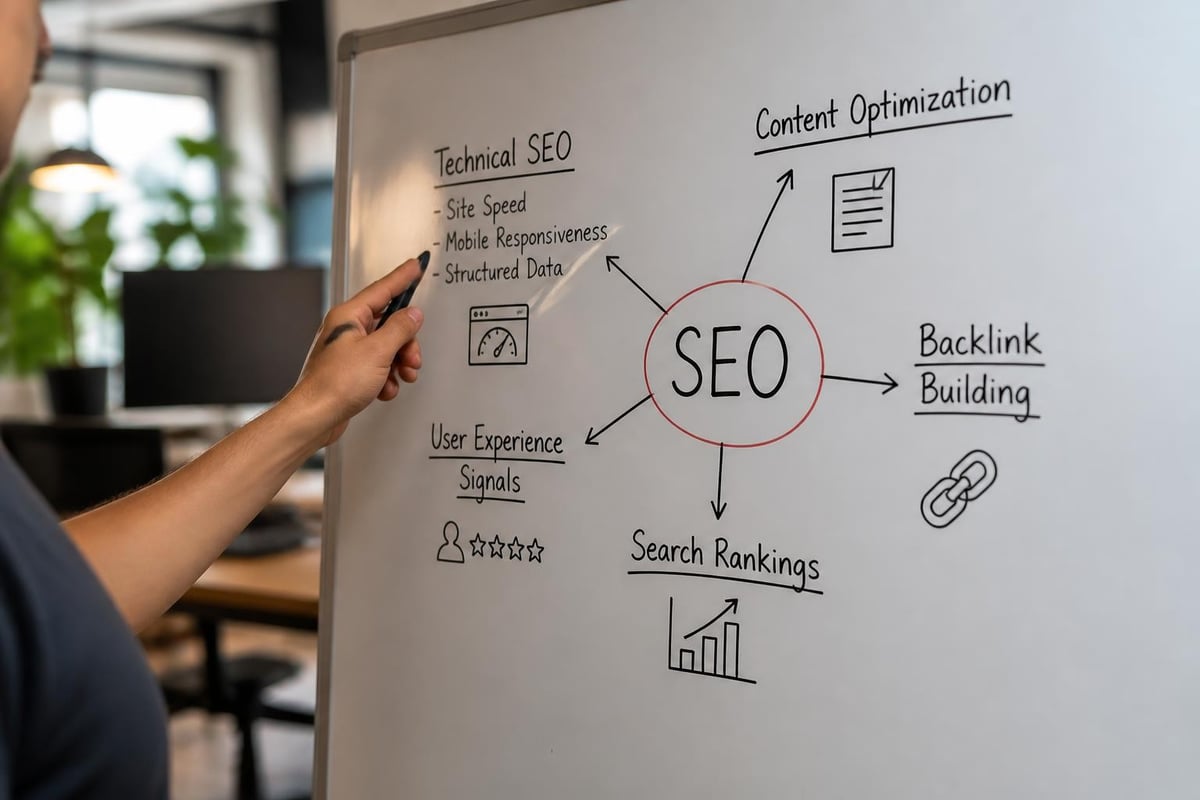
Your website's technical health directly impacts its ability to rank well in search results. Core elements include:
| Technical Factor | Why It Matters | Impact Level |
|---|---|---|
| Page Speed | Google uses speed as a ranking factor; slow sites frustrate users | High |
| Mobile Responsiveness | Over 60% of searches occur on mobile devices | Critical |
| Secure Connection (HTTPS) | Trust signal and ranking factor | High |
| Structured Data | Helps search engines understand your content context | Medium |
| XML Sitemap | Ensures all important pages are discovered and indexed | Medium |
| Clean URL Structure | Improves crawlability and user experience | Medium |
Beyond these technical elements, on-page optimisation ensures each page effectively communicates its topic and value. This includes strategic keyword placement, compelling meta descriptions, header hierarchy, and internal linking structures that help both users and search engines navigate your site effectively.
Content Marketing as Your Strategic Asset
Content marketing transforms internet marketing for business from transactional to relational, positioning your company as a trusted adviser rather than just another vendor. The businesses that thrive online in 2026 are those providing exceptional value through their content, answering questions, solving problems, and educating their audiences.
Developing a content strategy requires understanding the customer journey from initial awareness through consideration and decision-making. Different content formats serve different stages effectively.
Content Types and Their Strategic Purposes
Blog articles and guides attract new visitors through search engines whilst establishing topical authority. These comprehensive resources rank for competitive keywords and continue driving traffic indefinitely.
Video content has become increasingly critical, with platforms like YouTube serving as the second-largest search engine globally. Product demonstrations, tutorials, and behind-the-scenes content build authentic connections with audiences.
Case studies and testimonials provide social proof that reduces perceived risk for prospective customers. They transform abstract promises into concrete examples of value delivered.
Infographics and visual content simplify complex information and earn backlinks from other websites, strengthening your overall SEO performance.
Consistency matters more than perfection. Regular publishing schedules train audiences to expect and anticipate your content, whilst signaling to search engines that your site remains active and relevant. Many successful businesses maintain momentum by creating content calendars three months in advance, ensuring steady production regardless of short-term business pressures.
Paid Advertising for Immediate Impact
Whilst organic strategies build long-term value, paid advertising provides immediate visibility and precise targeting capabilities that complement your broader internet marketing for business efforts. The paid landscape offers numerous platforms and formats, each with distinct advantages.
Google Ads remains the dominant player for search-based advertising, allowing businesses to appear at the top of search results for high-intent keywords. When someone searches for "digital marketing agency London," paid ads ensure visibility even whilst organic rankings develop. TechRadar’s evaluation of marketing services highlights how Google Ads integrates with broader strategies.
Platform Selection and Budget Allocation
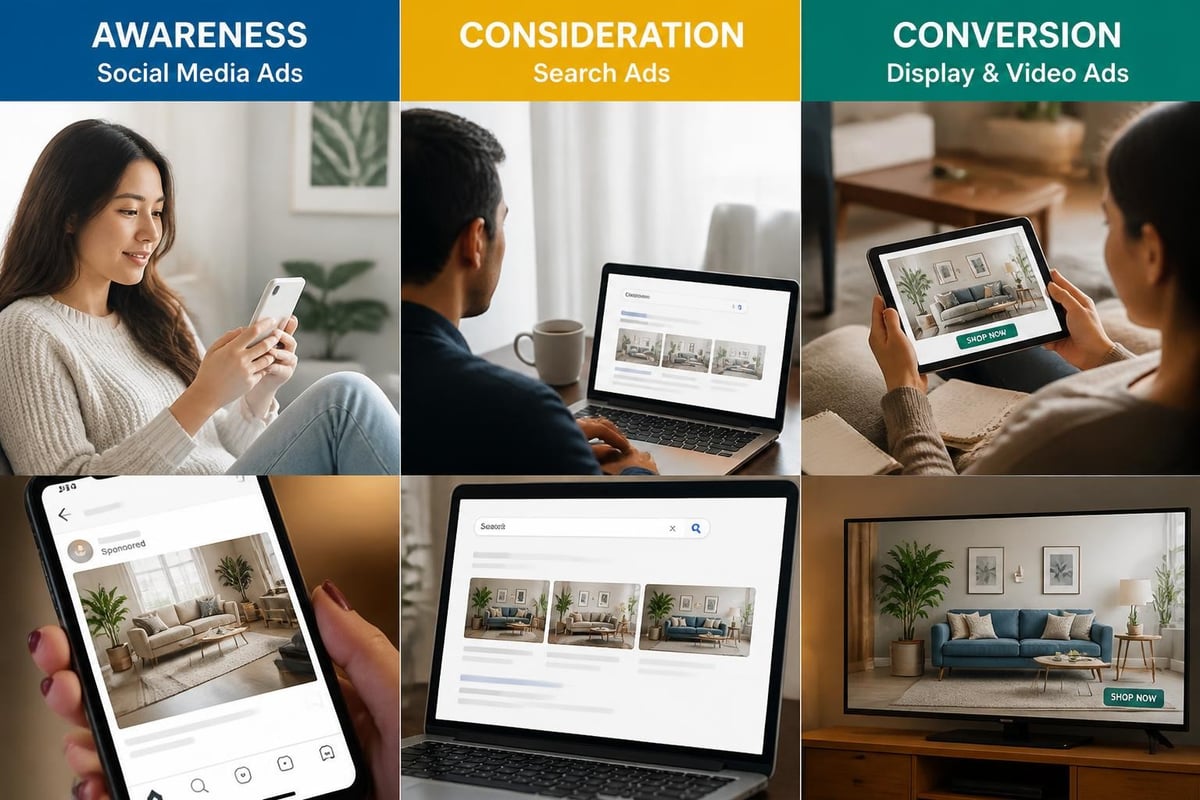
Choosing the right platforms depends on where your audience spends time and how they prefer to consume information:
- Google Search Ads capture high-intent users actively seeking solutions
- Facebook and Instagram Ads excel at building awareness and reaching specific demographic groups
- LinkedIn Ads deliver unmatched B2B targeting capabilities based on job titles, industries, and company sizes
- YouTube Ads combine video's engagement power with Google's targeting sophistication
- Display Advertising maintains brand presence across the web through remarketing campaigns
Budget allocation should reflect both platform performance and customer journey stages. Businesses typically invest more heavily in bottom-funnel channels like search ads that capture purchase-ready prospects, whilst maintaining consistent top-funnel spending to ensure steady audience growth.
The key to profitable paid advertising lies in continuous testing and optimisation. Small improvements in click-through rates, conversion rates, or cost-per-click compound dramatically over time, transforming marginally profitable campaigns into highly lucrative channels.
Email Marketing's Enduring Value
Despite predictions of email's demise, it remains one of the highest-ROI channels in internet marketing for business, generating an average return of £36 for every pound spent. Email's power stems from its directness-you own the subscriber list, unlike social media platforms where algorithm changes can devastate organic reach overnight.
Building an email list should be a priority for every business. This requires offering compelling lead magnets-valuable resources provided in exchange for email addresses. Effective lead magnets solve specific problems your ideal customers face: templates, checklists, exclusive guides, or free consultations.
Segmentation and Personalisation Strategies
Modern email marketing transcends mass broadcasting. Sophisticated segmentation allows you to send highly relevant messages to specific audience subsets based on:
- Behavioural data including past purchases, website pages visited, and email engagement patterns
- Demographic information such as location, company size, or industry vertical
- Journey stage distinguishing new subscribers from long-term customers
- Engagement levels separating active participants from dormant subscribers requiring re-engagement campaigns
Personalisation extends beyond simply inserting someone's first name. Dynamic content blocks display different messages to different segments within the same email, ensuring relevance whilst maintaining production efficiency. The businesses achieving the strongest email marketing results send fewer, better-targeted messages rather than overwhelming subscribers with daily broadcasts.
Social Media's Role in Modern Marketing
Social media marketing serves multiple functions within comprehensive internet marketing for business strategies. These platforms facilitate brand building, customer service, community development, and direct sales-often simultaneously.
The social landscape has fragmented considerably. Rather than attempting presence everywhere, successful businesses identify where their specific audiences congregate and invest deeply in those platforms. B2B companies often find LinkedIn delivers superior results, whilst visual consumer brands thrive on Instagram and Pinterest.
Organic social media builds relationships and maintains brand presence between promotional moments. Valuable content, authentic engagement, and consistent personality attract followers who become customers over time.
Paid social advertising accelerates growth through precise targeting and immediate reach. These platforms offer unmatched demographic and psychographic targeting capabilities, allowing you to reach precisely your ideal customer profile.
Content Strategies That Drive Engagement
Social media content succeeds when it provides value before asking for anything in return. Educational posts, entertaining content, behind-the-scenes glimpses, and user-generated content typically outperform overtly promotional messages. The 80/20 rule applies well here-80% value-driven content, 20% promotional.
Consistency in posting schedules matters tremendously. Algorithms favour accounts that post regularly, showing their content to more followers. This doesn't mean posting constantly-quality trumps quantity-but rather maintaining predictable rhythms your audience can anticipate.
Local Marketing for Geographic Targeting
For businesses serving specific geographic areas, local internet marketing strategies become particularly important. Local SEO ensures your business appears when nearby customers search for relevant services, driving foot traffic and local sales.
Google Business Profile optimisation serves as the foundation. This free tool places your business directly in Google Maps and local search results, displaying crucial information including hours, location, phone number, and customer reviews. Businesses with complete, regularly updated profiles appear more prominently in local searches.
- Complete every section of your profile thoroughly
- Upload high-quality photos showcasing your business, products, and team
- Collect and respond to customer reviews consistently
- Post updates about special offers, events, or news
- Ensure your NAP (Name, Address, Phone) remains consistent across all online directories
Location-specific content also strengthens local visibility. Creating pages or posts about serving particular neighbourhoods, discussing local events, or highlighting local customer success stories signals geographic relevance to search engines.

Analytics and Performance Measurement
Internet marketing for business requires systematic measurement to understand what's working, what's not, and where opportunities lie. Without robust analytics, you're essentially flying blind, unable to distinguish successful tactics from wasteful ones.
Google Analytics provides comprehensive insights into website traffic, user behaviour, and conversion patterns. Understanding which channels drive the most valuable visitors, which pages convert best, and where users abandon their journeys enables data-driven optimisation.
Key Metrics Worth Tracking
| Metric Category | Specific Metrics | Why They Matter |
|---|---|---|
| Traffic | Sessions, Users, Page Views | Measures audience size and growth |
| Engagement | Bounce Rate, Time on Site, Pages per Session | Indicates content relevance and quality |
| Conversions | Conversion Rate, Goal Completions, Revenue | Directly measures business results |
| Acquisition | Traffic Sources, Channel Performance | Shows which marketing efforts work |
| Behaviour | Top Pages, Exit Pages, Site Search | Reveals how users navigate your site |
Beyond Google Analytics, platform-specific analytics provide deeper insights into individual channel performance. Facebook Ads Manager, Google Ads reporting, and email marketing analytics each offer unique perspectives on campaign effectiveness.
The most successful businesses establish regular reporting cadences-weekly for tactical adjustments, monthly for strategic reviews, and quarterly for comprehensive performance evaluations. These reviews identify trends, surface opportunities, and ensure resources flow toward the highest-performing activities.
Website Optimisation and Conversion Focus
Your website serves as the hub for all internet marketing for business activities, making its performance absolutely critical. Even exceptional marketing campaigns deliver poor results when websites fail to convert visitors effectively.
Web design significantly impacts both user experience and conversion rates. Modern websites must load quickly, navigate intuitively, and present information clearly. Mobile responsiveness is non-negotiable-Google now uses mobile-first indexing, meaning your mobile site determines search rankings even for desktop searches.
Conversion rate optimisation focuses on systematically improving the percentage of visitors who complete desired actions. Small improvements compound dramatically. Increasing conversion rates from 2% to 3% represents a 50% improvement in results from the same traffic.
Elements That Influence Conversion Rates
Clear value propositions immediately communicate why visitors should choose your business. Ambiguous messaging creates confusion, whilst compelling value propositions differentiate you from competitors.
Strategic calls-to-action guide visitors toward desired next steps. Effective CTAs are specific, action-oriented, and prominently placed throughout the site.
Trust signals including customer testimonials, industry certifications, security badges, and case studies reduce perceived risk and increase confidence in purchasing decisions.
Simplified forms remove friction from the conversion process. Every field you eliminate from a form increases completion rates. Many businesses see substantial improvements by asking only for essential information initially, gathering additional details later in the relationship.
For businesses looking to establish or refresh their online presence, considering comprehensive packages like this new website deal can provide the foundation needed for effective digital marketing.
Integration and Automation for Efficiency
As internet marketing for business grows more sophisticated, integration between platforms becomes increasingly valuable. Marketing automation connects your various tools, enabling seamless data flow and coordinated campaigns across channels.
Customer relationship management systems serve as central hubs, tracking all interactions with prospects and customers. When integrated with your website, email platform, and advertising accounts, CRMs provide comprehensive visibility into customer journeys and enable personalised marketing at scale.
Marketing automation workflows nurture leads systematically without manual intervention. A prospect downloading a guide might automatically receive a series of educational emails over subsequent weeks, gradually building trust and demonstrating value until they're ready to purchase.
Retargeting campaigns reconnect with website visitors across the internet, maintaining brand presence and encouraging return visits. These campaigns typically generate higher conversion rates at lower costs than prospecting efforts.
The top digital marketing websites often showcase advanced integration strategies that coordinate multiple channels seamlessly, creating cohesive customer experiences regardless of touchpoint.
Emerging Trends Shaping 2026
The internet marketing landscape continues evolving rapidly. Staying ahead of trends provides competitive advantages whilst late adoption risks falling behind competitors.
Artificial intelligence now powers everything from content creation to customer service chatbots. AI tools help businesses scale personalisation, predict customer behaviour, and optimise campaigns automatically based on performance data.
Voice search optimisation grows increasingly important as smart speakers and voice assistants become ubiquitous. Optimising for conversational queries and featured snippets helps businesses capture voice search traffic.
Video content dominance continues accelerating. Short-form video particularly resonates with audiences across platforms, whilst live streaming builds authentic connections and drives engagement.
Privacy-first marketing responds to increasing consumer concerns and regulatory requirements. The phasing out of third-party cookies forces marketers to build first-party data strategies through owned channels like email lists and website registrations.
Interactive content including quizzes, calculators, and assessments drives higher engagement than static content whilst providing valuable insights into customer preferences and needs.
Building Your Integrated Strategy
Successful internet marketing for business requires orchestrating multiple channels into coherent strategies aligned with business objectives. Rather than treating each channel separately, integrated approaches create synergies where combined results exceed the sum of individual parts.
Start by defining clear objectives. Are you prioritising brand awareness, lead generation, or direct sales? Different goals require different channel mixes and success metrics.
- Audit your current digital presence across all channels
- Identify your ideal customer profiles and where they spend time online
- Map customer journeys from initial awareness through purchase and beyond
- Allocate budgets based on channel effectiveness and business priorities
- Establish measurement frameworks and reporting cadences
- Test systematically, learning from both successes and failures
- Scale what works whilst eliminating or improving underperforming activities
Remember that internet marketing success rarely happens overnight. Consistent execution over months and years builds momentum that transforms business trajectories. The companies dominating their markets online didn't achieve that position through single campaigns-they built it through sustained commitment to excellence across all digital touchpoints.
Working with experienced digital marketing and PR agencies can accelerate your progress by leveraging specialised expertise across disciplines, from technical SEO to paid advertising strategy.
Internet marketing for business represents both tremendous opportunity and significant complexity in 2026, requiring strategic thinking, consistent execution, and ongoing optimisation across multiple channels. The businesses that thrive understand this isn't about mastering every tactic simultaneously-it's about building integrated strategies that align with customer needs and business objectives. OxD PR helps businesses across London and beyond transform their digital presence through comprehensive strategies spanning web design, SEO, content marketing, and brand development, turning online visibility into measurable business growth. Ready to elevate your digital marketing? Connect with our team to explore how we can help you achieve your goals.