Local PPC Management: A Complete Guide for 2026
Managing paid advertising campaigns at a local level requires a fundamentally different approach to national or international strategies. Local PPC management focuses on capturing high-intent customers within specific geographic boundaries, ensuring every pound spent reaches potential clients who can physically visit your business or require services in their immediate area. With consumer behaviour increasingly favouring "near me" searches and location-specific queries, businesses that master local paid advertising gain a significant competitive advantage in their markets. The precision available through modern advertising platforms means companies can target streets, postcodes, and even radius-based zones around their locations, transforming how local businesses compete for customer attention.
Understanding the Fundamentals of Local PPC
Local PPC management differs considerably from broader campaigns because the targeting parameters become significantly more granular. Rather than casting a wide net across entire countries, local campaigns focus on specific towns, cities, or neighbourhoods where your business operates.
The core principle involves identifying geographic areas where your ideal customers live, work, or search for services. This geographical precision ensures your advertising budget concentrates on users most likely to convert into actual customers.
Key components of successful local campaigns include:
- Precise geographic targeting using radius, postcode, or boundary-based parameters
- Location-specific keyword strategies incorporating neighbourhood and area names
- Ad scheduling aligned with local business hours and peak customer activity
- Mobile-optimised campaigns capturing on-the-go local searches
- Call extensions and location extensions maximising immediate contact opportunities
Geographic Targeting Strategies
Effective local PPC campaigns require strategic geo-targeting to capture high-intent searches whilst avoiding wasted spend. The platform options available in 2026 provide unprecedented control over where advertisements appear.
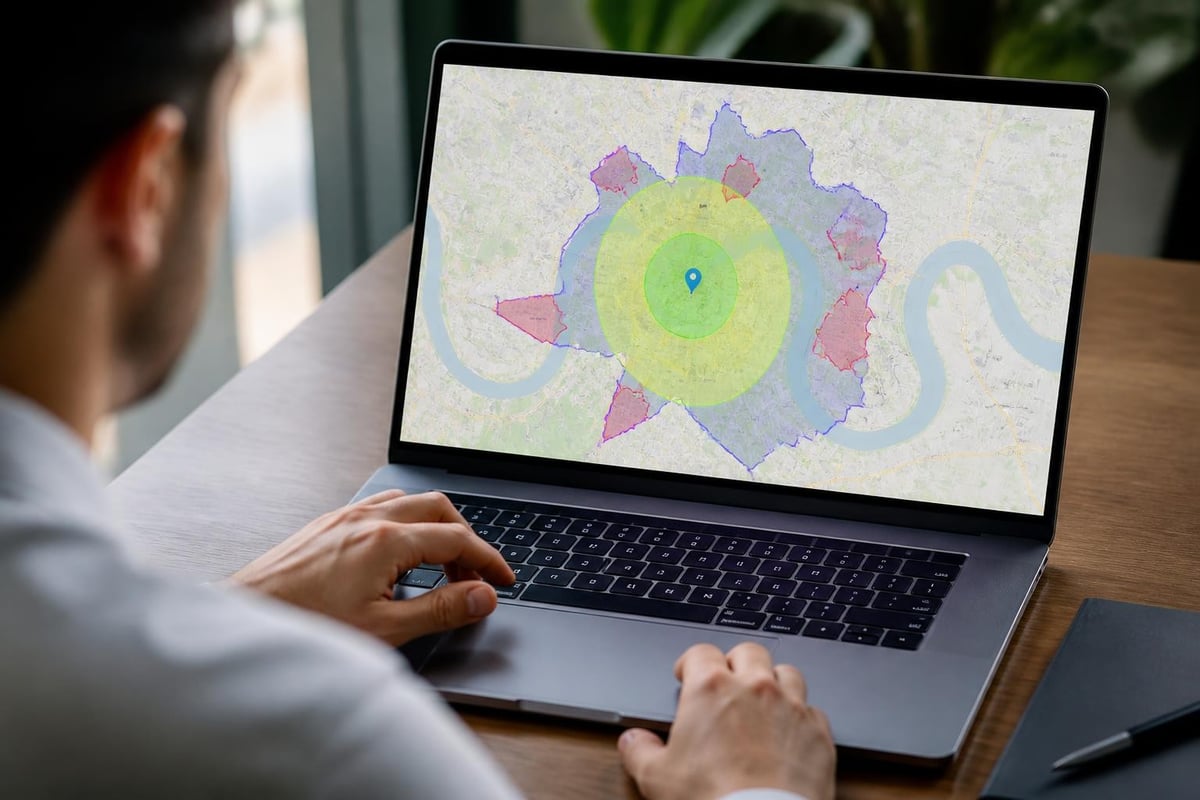
Radius targeting allows businesses to create concentric circles around physical locations, ensuring ads display only to users within defined distances. This proves particularly valuable for service-based businesses where travel time impacts profitability.
| Targeting Method | Best Use Case | Precision Level |
|---|---|---|
| Radius Targeting | Service areas around fixed locations | High |
| Postcode Targeting | Specific neighbourhoods or districts | Very High |
| City/Town Targeting | Broader local presence | Medium |
| Custom Polygons | Irregular service areas | Highest |
Postcode-level targeting enables even finer control, allowing advertisers to include or exclude specific areas based on demographic data, historical performance, or service capacity. Many businesses discover that certain postcodes convert significantly better than others, justifying increased bid adjustments for those zones.
Keyword Research for Local Markets
Local keyword research extends beyond simply adding city names to standard search terms. The most effective local PPC management involves understanding how residents actually describe their needs and locations.
Search behaviour varies considerably between regions. What Londoners call a "corner shop," residents in other areas might term a "convenience store" or "newsagent." These linguistic variations significantly impact campaign performance.
Building Location-Modified Keyword Lists
Start with your core service or product keywords, then systematically expand them with location modifiers. This includes:
- City and town names (e.g., "plumber London," "accountant Manchester")
- Neighbourhood and district names (e.g., "electrician Shoreditch," "dentist Notting Hill")
- Landmark-based terms (e.g., "café near Tower Bridge," "gym near Piccadilly")
- Directional modifiers (e.g., "north London solicitor," "south Manchester restaurant")
Popular PPC best practices for local businesses emphasise the importance of capturing various search intent levels through keyword variations.
Proximity-based keywords like "near me," "nearby," and "closest" have exploded in usage, particularly on mobile devices. These terms indicate extremely high purchase intent, as users actively seek immediate solutions.
Long-tail local keywords typically convert better because they indicate specific needs:
- "Emergency 24-hour plumber Islington"
- "Vegan restaurant Camden delivery"
- "Same-day dry cleaning Kensington"
Crafting Location-Specific Ad Copy
Generic advertisements fail in local markets where customers expect personalised, relevant messaging. Your ad copy must immediately communicate local presence and understanding of regional needs.
Incorporating specific location names in headlines dramatically improves click-through rates. A headline reading "Expert Plumbers in Wimbledon" outperforms "Expert Plumbers" for users searching within that area.
Ad Copy Elements That Drive Local Engagement
Beyond location names, effective local ads leverage community knowledge and address location-specific pain points. A roofing company in coastal areas might reference salt air damage, whilst one inland focuses on different weather-related concerns.
Call-to-action phrases should emphasise proximity and convenience:
- "Visit Our Hampstead Showroom Today"
- "Serving Chelsea Residents Since 1998"
- "Free Quotes Across Birmingham"
Ad extensions become crucial in local campaigns. Location extensions display your address directly in the ad, whilst call extensions enable immediate phone contact. Callout extensions can highlight "Free Parking," "Next to Tube Station," or other location-specific benefits.
| Extension Type | Local Application | Impact |
|---|---|---|
| Location Extensions | Shows address and map | Increases trust and foot traffic |
| Call Extensions | Displays phone number | Enables immediate contact |
| Sitelink Extensions | Links to location pages | Improves navigation |
| Callout Extensions | Highlights local benefits | Increases relevance |

Budget Allocation and Bid Management
Local PPC management requires careful budget distribution across multiple geographic zones and time periods. Not all locations perform equally, and successful campaigns adjust spending based on actual conversion data.
Start by allocating budgets proportionally to population density and historical customer acquisition patterns. A business with three locations might initially split budgets based on each area's population, then adjust based on performance.
Location-Based Bid Adjustments
Modern advertising platforms allow bid modifications based on user location, enabling advertisers to increase bids for high-performing areas whilst reducing spend in less profitable zones.
If your data shows customers from Kensington convert at twice the rate of those from other areas, applying a +100% bid adjustment for that location maximises return whilst maintaining overall budget efficiency. Businesses leveraging effective local PPC management practices regularly monitor and adjust these location modifiers.
Strategic bid adjustment categories include:
- Geographic performance (by postcode, city, or radius)
- Time of day (matching business hours and peak demand)
- Day of week (capturing weekend vs weekday patterns)
- Device type (mobile users often have higher local intent)
Landing Page Optimisation for Local Conversions
Driving clicks means nothing without conversion-optimised landing pages tailored to local audiences. Each geographic area you target ideally receives a dedicated landing page addressing that specific location.
Location-specific landing pages should feature:
- Prominent location mentions in headlines and opening paragraphs
- Local imagery showing recognisable landmarks or neighbourhoods
- Area-specific contact information including local phone numbers
- Customer testimonials from residents in that area
- Embedded maps showing your proximity to the searcher
Many businesses find that their website design significantly impacts conversion rates, particularly when combining compelling copy with clear calls-to-action and mobile responsiveness.
Mobile Experience Considerations
With the majority of local searches occurring on mobile devices, your landing pages must load quickly and provide streamlined conversion paths. Click-to-call buttons should appear prominently, and forms should minimise required fields.
Google's page experience signals now heavily weight mobile performance, meaning slow-loading pages face reduced ad visibility regardless of bid amounts. Compress images, minimise code, and implement accelerated mobile pages where appropriate.
Tracking and Measuring Local Campaign Performance
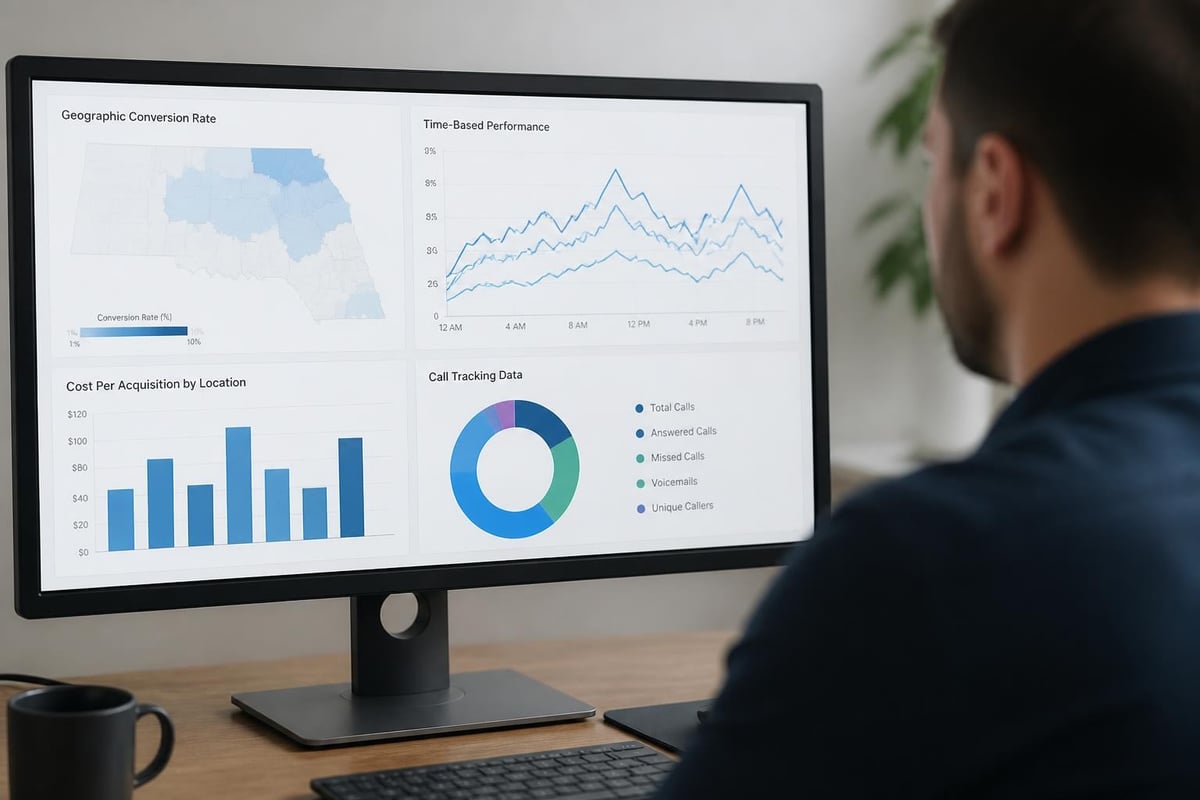
Effective local PPC management depends on accurate tracking of both online and offline conversions. Many local businesses receive phone calls, foot traffic, or in-person consultations resulting from online ads, requiring conversion tracking beyond simple form submissions.
Call tracking numbers unique to each campaign or location enable precise attribution. When a customer phones after seeing your ad, the system records that conversion, providing complete visibility into campaign ROI.
| Metric | Why It Matters | Target Range |
|---|---|---|
| Cost Per Acquisition | Measures efficiency of spend | Varies by industry |
| Click-Through Rate | Indicates ad relevance | 3-5% for local campaigns |
| Conversion Rate | Shows landing page effectiveness | 5-10% for local services |
| Quality Score | Affects ad cost and position | 7+ ideal |
Store visit tracking, available through Google Ads, estimates how many ad interactions lead to physical location visits. Whilst not perfectly accurate, it provides valuable insights into offline impact.
Attribution Across Multiple Touchpoints
Local customers rarely convert on first contact. They might see your ad on mobile whilst commuting, visit your website later from desktop, then phone the next day. Multi-touch attribution models help you understand this journey.
Implementing comprehensive digital marketing strategies alongside PPC ensures consistent messaging across all customer touchpoints, improving overall conversion rates.
Competitive Analysis and Market Positioning
Understanding your local competitive landscape shapes effective bidding strategies and messaging. Use auction insights reports to identify which competitors appear for your target keywords and their impression share.
In competitive local markets, securing top positions for every keyword becomes cost-prohibitive. Smart advertisers identify high-intent, lower-competition keywords where they can achieve visibility without excessive costs.
Analysing Competitor Strategies
Review competitor advertisements regularly, noting their:
- Unique selling propositions and differentiators
- Promotional offers and pricing strategies
- Ad extension usage and call-to-action approaches
- Geographic targeting patterns
This intelligence informs your positioning. If competitors emphasise price, you might differentiate through expertise, speed, or customer service. Case studies like this med spa achieving 67% lower conversion costs demonstrate how strategic positioning impacts performance.
Seasonal and Event-Based Optimisation
Local markets experience fluctuations based on seasons, local events, weather patterns, and community activities. Proactive campaign adjustments maximise opportunities during peak periods whilst conserving budget during slower times.
A landscaping company might increase bids in spring when homeowners plan garden improvements, whilst a heating engineer intensifies advertising before winter. Event-based targeting captures opportunities around concerts, festivals, or sporting events that drive visitors to your area.
Seasonal optimisation tactics include:
- Budget increases during historically high-conversion periods
- Ad copy updates reflecting current conditions or seasons
- Expanded keyword lists capturing seasonal search terms
- Promotional scheduling aligned with local shopping patterns
Weather-based automated rules can trigger bid increases when conditions favour your services. A roofing company might increase bids during rainy periods when leak-related searches spike.
Advanced Local Targeting Techniques
Beyond basic geographic boundaries, sophisticated local PPC management leverages demographic, behavioural, and contextual signals to refine audience reach.
Household income targeting enables premium service providers to focus on affluent postcodes, whilst value-focused businesses target different demographics. Combined with location data, these audience layers dramatically improve efficiency.
Audience Layering Strategies
Create custom audiences based on:
- Previous website visitors from specific locations
- Customer list matching for remarketing to known local customers
- In-market audiences showing active purchase intent
- Life event targeting (moving house, getting married, etc.)
Remarketing to users who previously visited location-specific pages keeps your business top-of-mind as they progress through their decision journey. Someone who viewed your "Services in Brighton" page but didn't convert represents a warm prospect worth re-engaging.
Integration with Broader Marketing Efforts
Local PPC campaigns perform optimally when integrated with other marketing channels. Consistent messaging across creative strategy implementations reinforces brand recognition and improves conversion rates.
Coordinate local PPC with:
- Local SEO efforts targeting the same geographic areas and keywords
- Social media advertising on platforms like Facebook and Instagram with location targeting
- Email marketing to segmented lists based on customer location
- Offline advertising ensuring message consistency across all channels
This integrated approach ensures potential customers encounter consistent branding and messaging regardless of where they interact with your business. When someone sees your local PPC ad after encountering your brand through organic search or social media, recognition increases conversion likelihood.
Managing Multiple Locations
Businesses operating across several locations face unique challenges in local PPC management. Each location requires individual attention whilst maintaining brand consistency and efficient management processes.
Structure campaigns either by location (separate campaigns for each area) or by service/product with location-based ad groups. The optimal approach depends on your specific situation:
| Structure Type | Advantages | Best For |
|---|---|---|
| Location-Based Campaigns | Easy budget control per area | Franchises, multiple branches |
| Service-Based with Location Ad Groups | Simplified management | Single-location businesses serving multiple areas |
| Hybrid Approach | Maximum flexibility | Large, complex operations |
Automated rules help manage multi-location accounts efficiently, adjusting bids, pausing underperforming elements, and alerting managers to significant changes without constant manual oversight.
Common Pitfalls and How to Avoid Them
Even experienced advertisers encounter challenges specific to local campaigns. Understanding these pitfalls helps you avoid wasted spend and missed opportunities.
Frequent mistakes include:
- Targeting too broad an area, diluting budget across low-intent searches
- Neglecting negative keywords, allowing ads to show for irrelevant variations
- Failing to track phone calls, missing a major conversion channel
- Using generic ad copy that doesn't emphasise local presence
- Overlooking mobile optimisation despite mobile-dominant local search
Implementing comprehensive local PPC strategies addresses these issues systematically through careful planning and ongoing optimisation.
Regular account audits identify emerging problems before they significantly impact performance. Review search term reports weekly to add negative keywords, check location reports for geographic patterns, and analyse competitor activity for market changes.
Platform Selection and Management
Whilst Google Ads dominates local search advertising, other platforms offer valuable opportunities for reaching local audiences. Bing Ads typically delivers lower costs per click with quality traffic, particularly for certain demographics.
Social media platforms including Facebook, Instagram, and LinkedIn provide sophisticated local targeting options. Facebook's radius targeting combined with demographic and interest filters creates highly specific local audiences.
Multi-Platform Strategy Benefits
Diversifying across platforms:
- Reduces dependency on single traffic sources
- Captures audiences with different platform preferences
- Provides competitive advantages in less saturated channels
- Enables broader remarketing coverage
Each platform requires tailored approaches. What works brilliantly on Google may need significant adaptation for social platforms. Test systematically, measure rigorously, and scale what demonstrates profitability.
Advanced Automation and Technology
Modern local PPC management leverages automation for both efficiency and performance improvements. Smart bidding strategies use machine learning to optimise bids based on conversion likelihood, adjusting in real-time based on countless signals.
Automated rules handle routine tasks like pausing ads outside business hours, adjusting bids based on performance thresholds, or sending alerts when metrics deviate from normal ranges. This frees managers to focus on strategic decisions rather than administrative tasks.
Dynamic ads automatically customise creative elements based on user location, previous interactions, or search context. A user searching from Camden sees "Expert Services in Camden" whilst someone in Brixton sees location-appropriate messaging, all from a single campaign template.
Reviewing diverse PPC case studies reveals how businesses across industries leverage these technologies for improved results.
Mastering local PPC management requires balancing technical precision with creative messaging, all whilst maintaining rigorous performance tracking and optimisation. The strategies outlined here provide a foundation for capturing high-intent local customers efficiently, whether you operate a single location or manage campaigns across multiple areas. At OxD PR, we combine strategic local PPC expertise with comprehensive digital marketing services to help London businesses and brands worldwide maximise their online visibility and drive measurable growth through data-driven campaigns tailored to your specific market.